Not All Pies Wear Crust: The British Tradition of Mash-Topped Pies
Why a British pie doesn't need pastry, where the mash-topped tradition came from, and why ours have cheese in the potato.
Chris Thomas ·
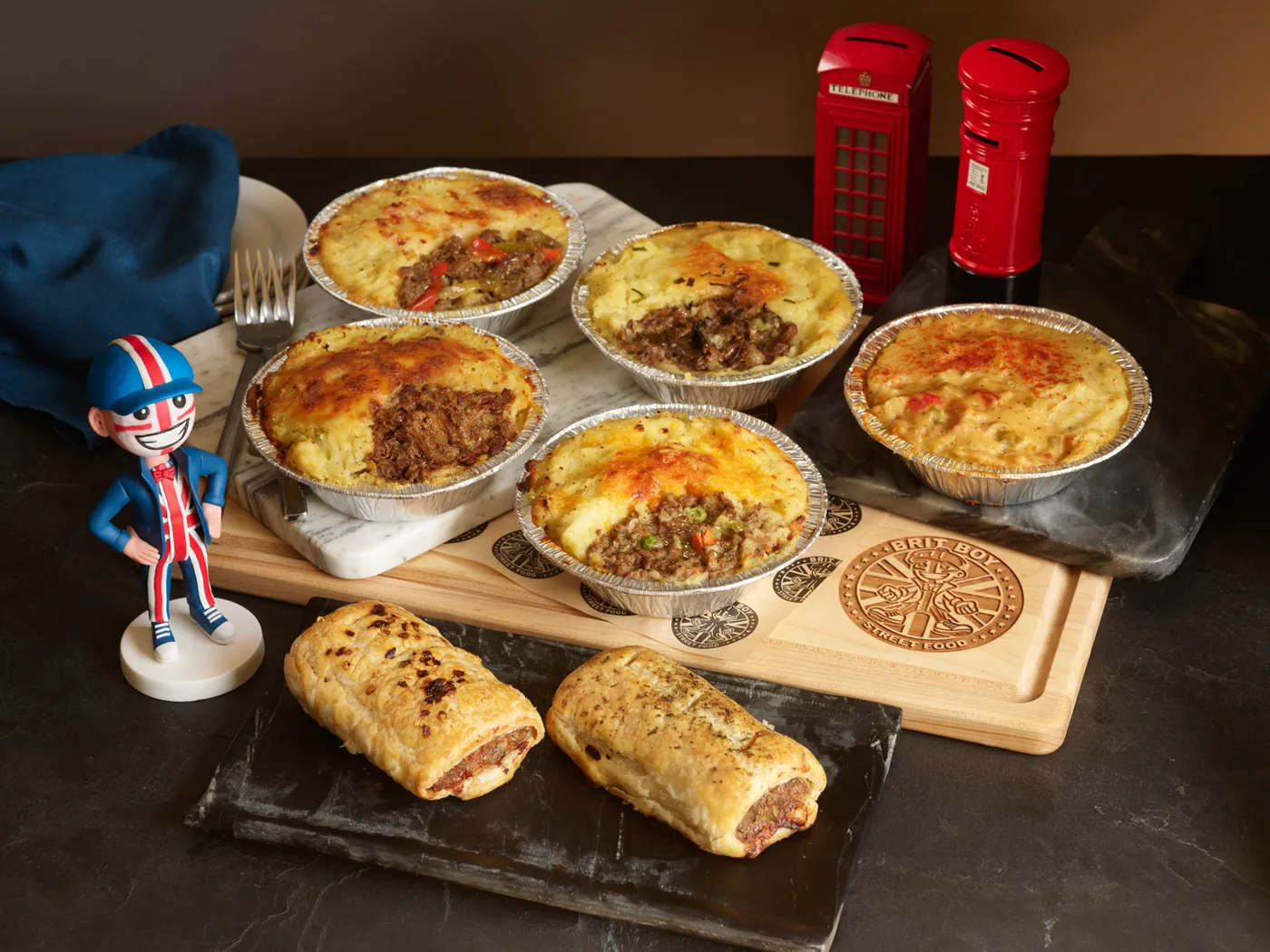
Say “pie” to most Americans and they picture pastry — a lid, a crimped edge, probably something sweet underneath. Say it in Britain and you might get that, or you might get a dish of slow-cooked meat under a thick layer of mashed potato, browned in the oven until the top goes golden and slightly crisp.
Both are pies. The second one is what we make, and people ask about it constantly.
Where the mash-topped pie came from
It starts, as most good British food does, with not wasting anything.
Eighteenth-century households roasted a joint at the weekend and were left with meat that needed using. Mincing it, mixing it with gravy and whatever vegetables were about, then baking it under mashed potato turned Sunday’s leftovers into Wednesday’s dinner. It fed a family from ingredients already in the house.
Potatoes made it possible. By the late 1700s they were cheap and grown everywhere in Britain and Ireland, which meant an ordinary household could afford enough to cover a dish. The potato lid was doing the job pastry did in wealthier kitchens — sealing the dish, holding the heat, browning on top — without flour, butter or the skill to make pastry properly.
That’s the whole invention. A crust made of something people already had.
Why the potato is a lid, not a side
This is the bit that separates a mash-topped pie from a casserole with mash next to it, and it matters more than it sounds.
The potato goes on before the dish goes in the oven, sealed edge to edge. It traps the steam, so the filling underneath keeps braising rather than drying out. And the top surface, exposed to the heat, dries and browns and goes slightly crisp, so you get two textures out of one ingredient — crisp on top, soft underneath.
Serve the mash separately and you’ve got a stew and a side. Put it on top and you’ve got a pie. The difference is real and you can taste it.
Why ours has cheese in it
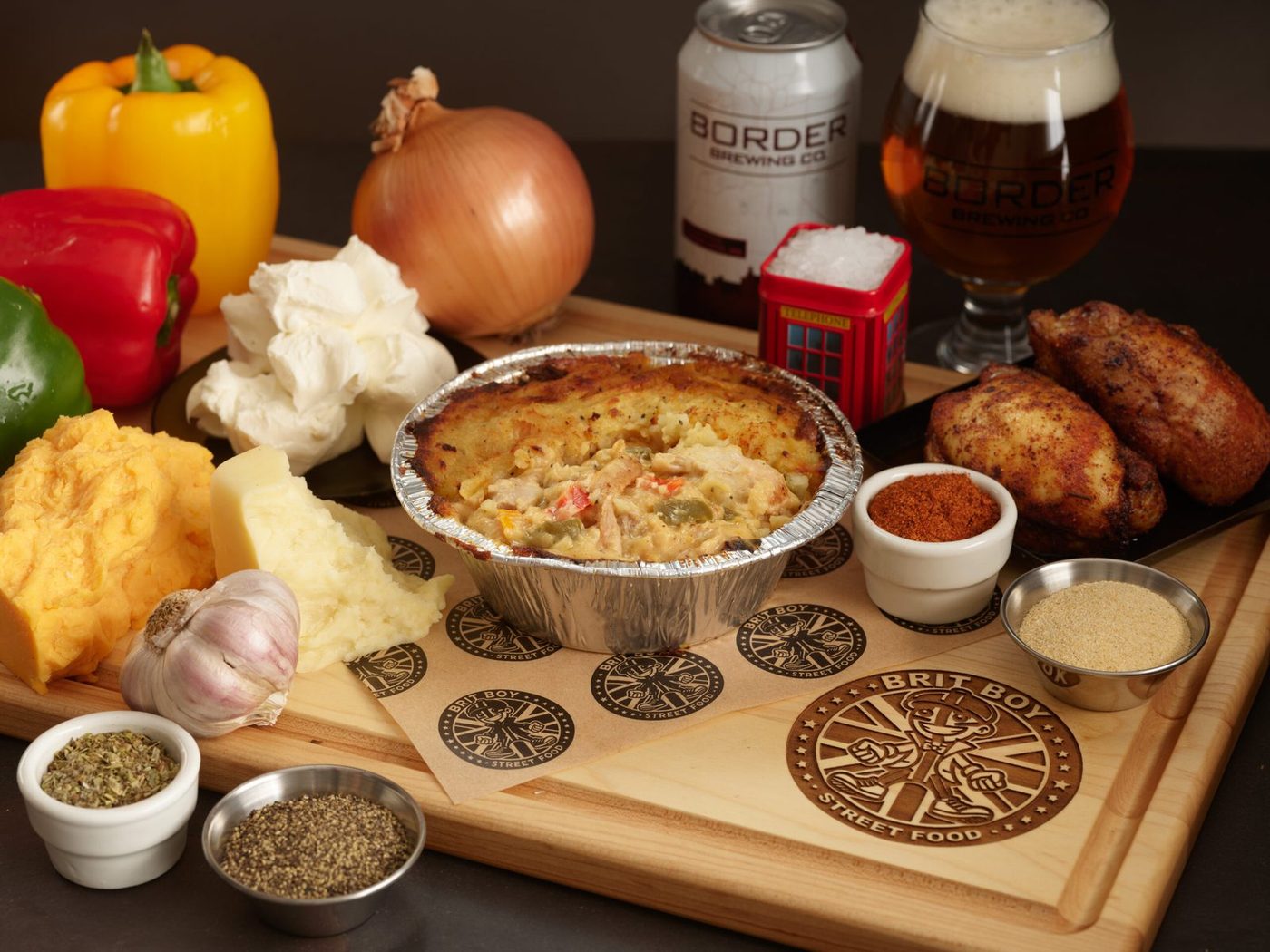
Plain mash browns badly. It’ll go pale gold if you’re patient, but you rarely get the proper patchy, darker-edged top that makes a shepherd’s pie look like something worth eating.
Cheese fixes that. The fats and proteins brown far more readily, so you get real colour and a bit of crunch at the edges. And a sharp cheddar cuts through a rich, ale-heavy filling in a way plain potato can’t — it stops a whole pie being one long note.
It isn’t traditional, strictly speaking. Plenty of British households would think it gilding the lily. We think they’re wrong, and so does everyone who’s eaten one.
The ones we make this way
- Steak, Ale & Mushroom — beef braised in dark ale, mushrooms, under cheesy mash
- Shepherd’s Pie — lamb-led with beef for texture, peas, carrots and sweetcorn. The ratio is deliberate
- Cheddar, Ale & Chicken — chicken thigh, sharp English cheddar, IPA
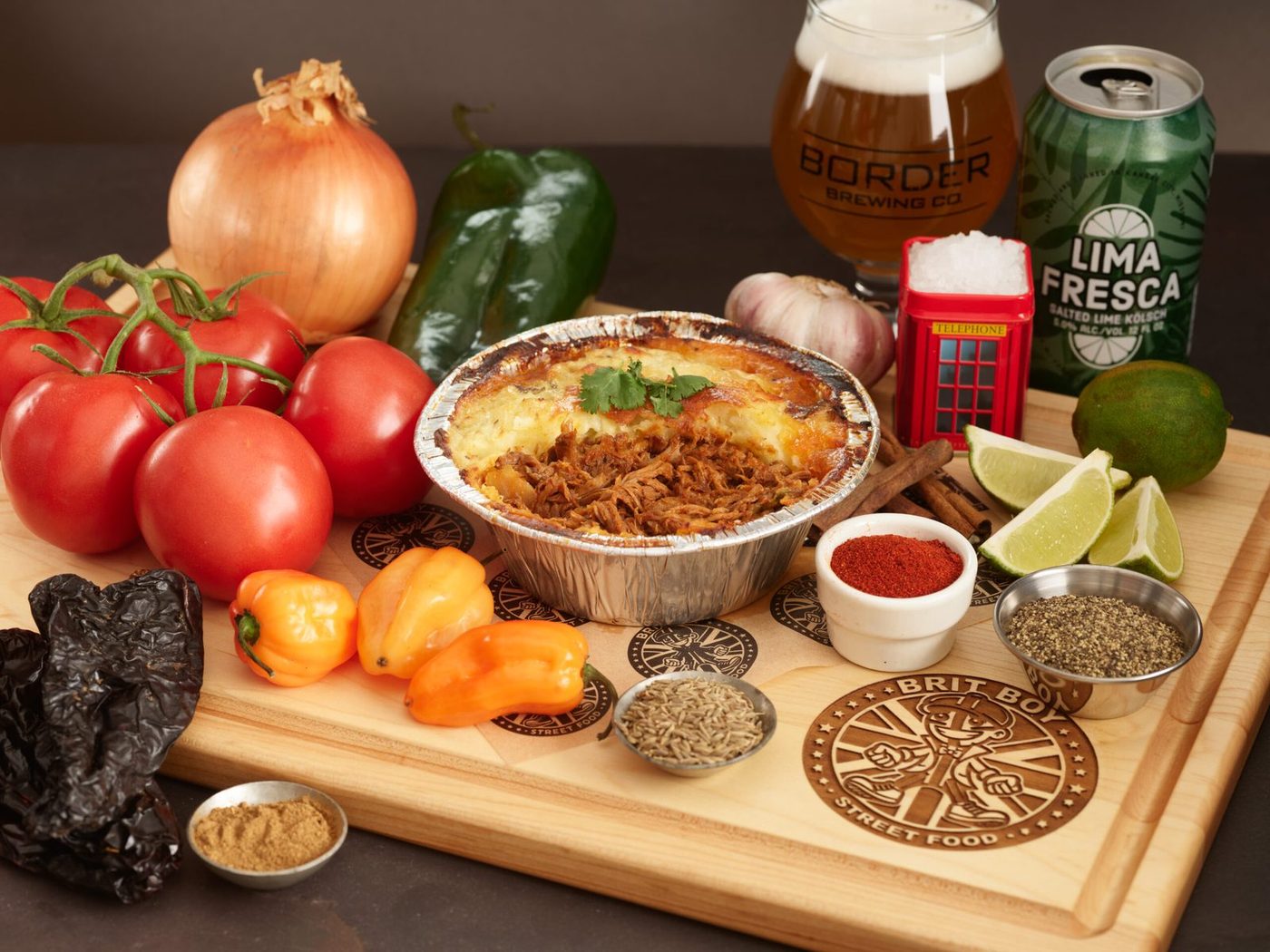
- Birria — slow-braised beef with a cilantro-lime mash. Not remotely traditional, and one of our best sellers
- Philly Cheese Steak — steak, onions and peppers, cheese on top and through it
- Brisket & Bean — twelve-hour brisket with British-style beans
Not everything we make skips the pastry. Sausage rolls and pasties are butter pastry through and through — the format follows the food rather than the other way round.
Is it healthier without the crust?
Sort of, and it’s worth being honest about the size of it.
You’re losing a pastry base and lid, which is where a lot of the fat and refined flour in a conventional pie sits. What you’ve gained is potato and cheese, which aren’t nothing. The real difference is that it’s a meal rather than a snack — ours run 50 to 70 grams of protein depending on which one, because the filling is meat rather than a thin layer of it under a lot of crust.
It’s still a pie. It’s just a pie where most of what you’re eating is the food rather than the container.
Cooking one
From frozen, always. 400°F for 45 to 50 minutes, until the top is properly golden and the centre is 165°F or above.
Two things people get wrong: thawing first, which makes the mash wet before it ever sees heat, and covering it with foil, which traps steam and stops the top browning — the exact thing you want. Longer guide here.
Try one
All of the above come in packs of 4, 8 and 12 in the shop. If you’re new to it, the Union Jack Sampler is four pies and two sausage rolls, and the Full Monty is twelve across the range.
Collect from one of our Kansas City pickup locations, find us at a market or pop-up, or we’ll send it frozen overnight anywhere in the fifty states.
Not all pies wear crust. The best ones wear mash.