What Makes a Proper Sausage Roll
Pastry, pork, and the small decisions that separate the real thing from a sausage in a blanket.
Chris Thomas ·
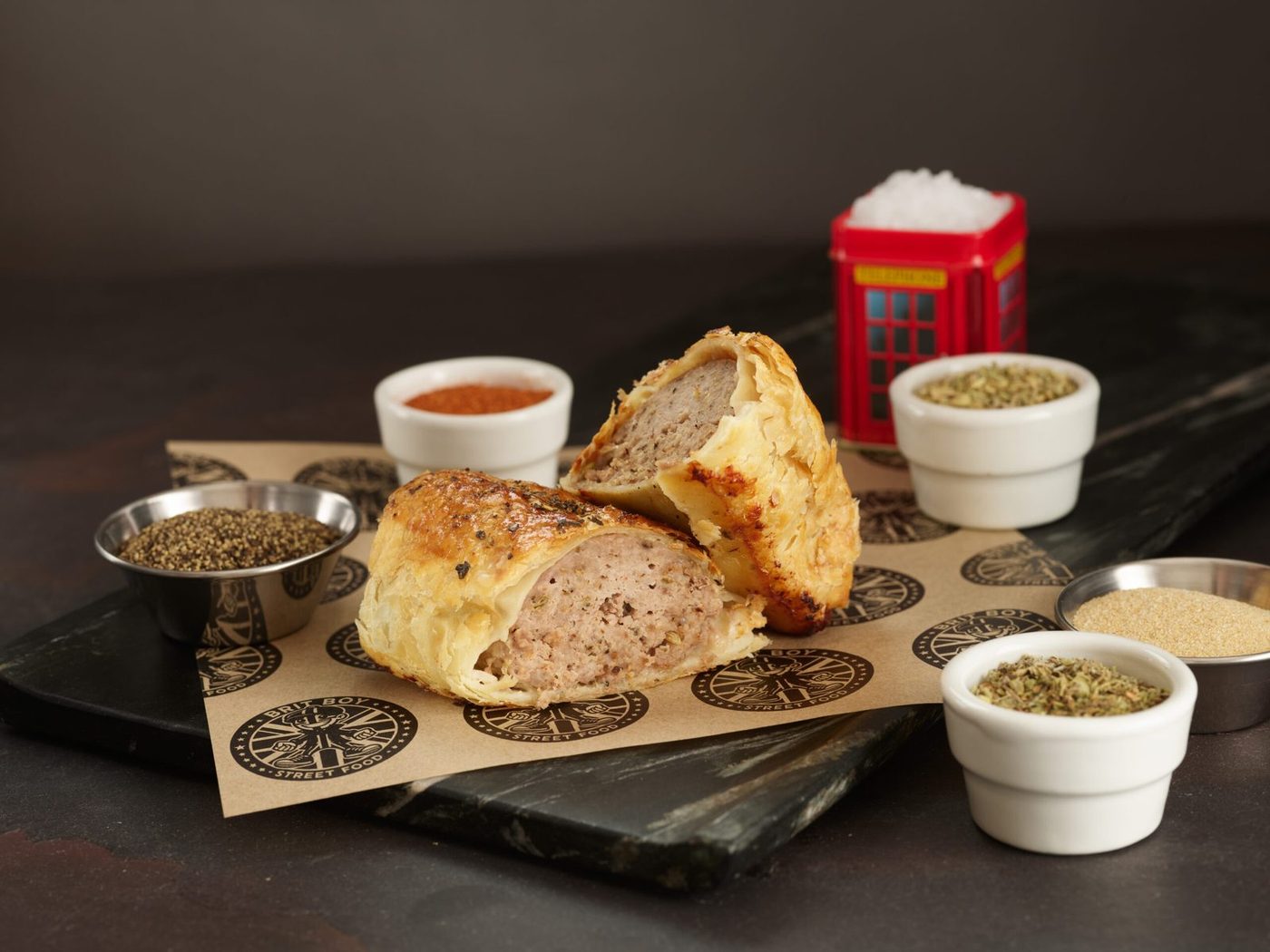
A sausage roll looks simple enough that everyone assumes they can make one, and then most people don’t. There’s nothing to hide behind. Pastry, seasoned pork, an egg wash, an oven. Get any of those slightly wrong and you end up with something perfectly edible and completely forgettable.
Here’s what matters.
The pastry has to shatter
This is the bit people skip, and it’s the bit you taste.
A proper puff pastry is dozens of layers of dough and fat, folded and rested and folded again. Rush it, or use a fat that’s too stable, and you get something that holds its shape beautifully and tastes of very little. Do it properly and the layers separate in the oven into something that collapses when you bite it.
If a sausage roll doesn’t leave crumbs down your shirt, something has gone wrong. That’s the test, and it’s not a low bar — most of what gets sold as a sausage roll fails it.
The pork, and what goes in with it
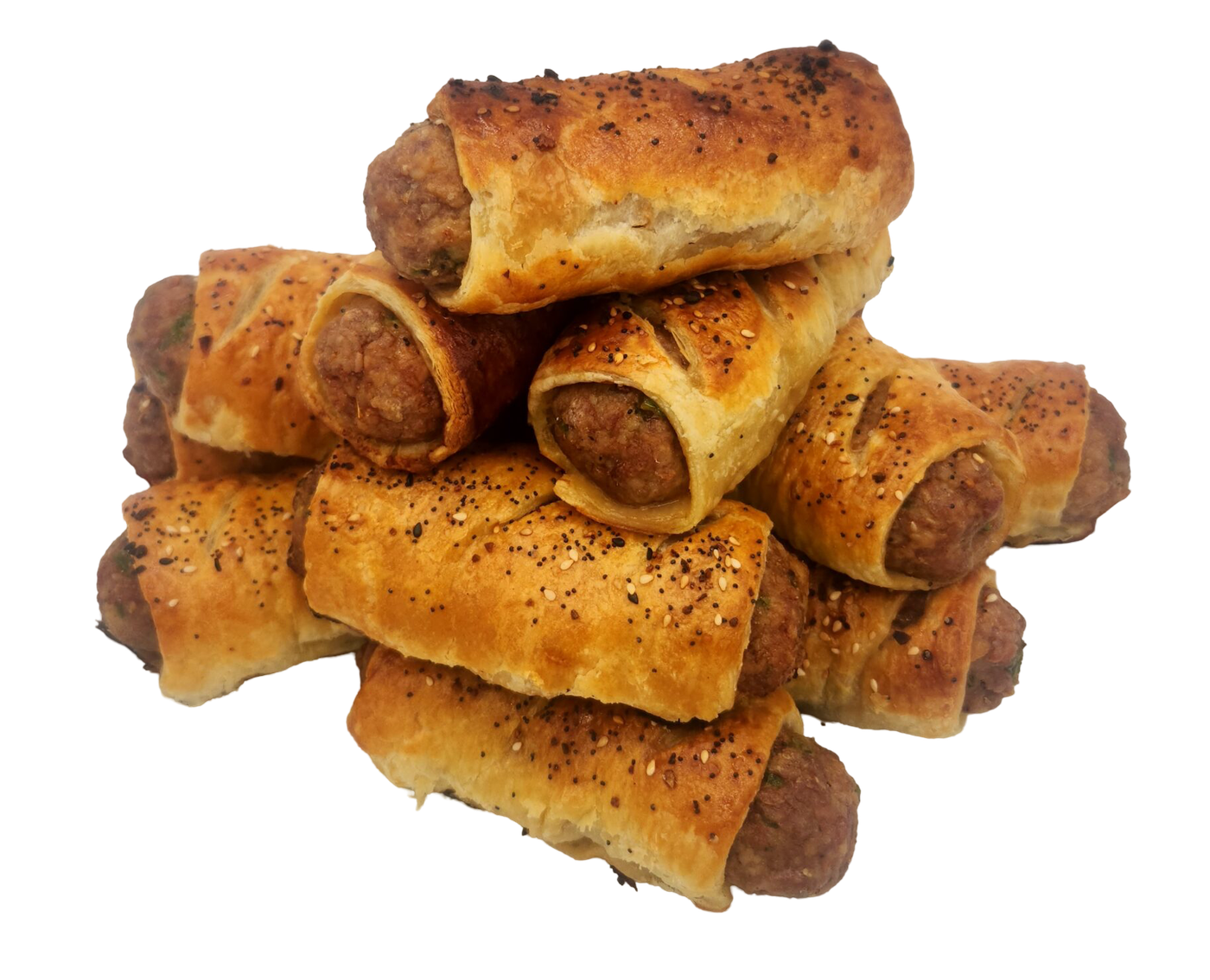
We use minced pork butt. Not the cheapest cut you could put in a sausage roll, and that’s the point — it has enough fat running through it to stay juicy through a long bake, where leaner pork goes dry and crumbly.
The seasoning we keep to ourselves. It’s a blend Chris worked out and adjusted over a long time, and it’s the reason ours tastes like a sausage roll from a bakery in Yorkshire rather than a generic pork product. Every baker in Britain has their own and none of them publish it.
What we will say is that the spicy version isn’t the traditional one with chilli thrown at it. It’s built from the base up, with heat that arrives after the flavour rather than instead of it. There’s a version of “spicy” that just burns, and it’s a lazy way of making something taste of anything at all.
The full ingredients are on each product page in the shop — pork, puff pastry, egg and spices, and nothing else. No palm oil, no shortening, no high-fructose corn syrup.
Texture matters more than people think
Meat worked too finely goes rubbery and springy. You want coarseness left in it, so there’s something to chew rather than a smooth paste. It’s the difference between a butcher’s sausage and a hot dog.
Too coarse and it falls apart when you cut it. Too fine and it bounces. Somewhere in the middle is a sausage roll.
The seal, the score, the wash
Three small things that all show up in the finished article.
The seal has to be proper or the thing opens in the oven and the filling escapes. Pinch it, crimp it, seam underneath.
The score across the top isn’t decoration — it lets steam out. Without it the pastry lifts away from the meat and you get a hollow gap between the two. Looks fine, disappoints when you bite it.
The egg wash is where the colour comes from. Skip it and you get pale, matte pastry that looks undercooked even when it isn’t. Thirty seconds of work for the entire visual difference.
Size is a decision too
The British sausage roll comes in two honest sizes: the small one you eat three of standing up at a party, and the substantial one that’s actually lunch. Both are legitimate. What isn’t legitimate is the miniature cocktail version that’s mostly pastry and exists to be handed round on a tray.
Ours are made to be a real thing you eat, because that’s what they were for.
What it’s for
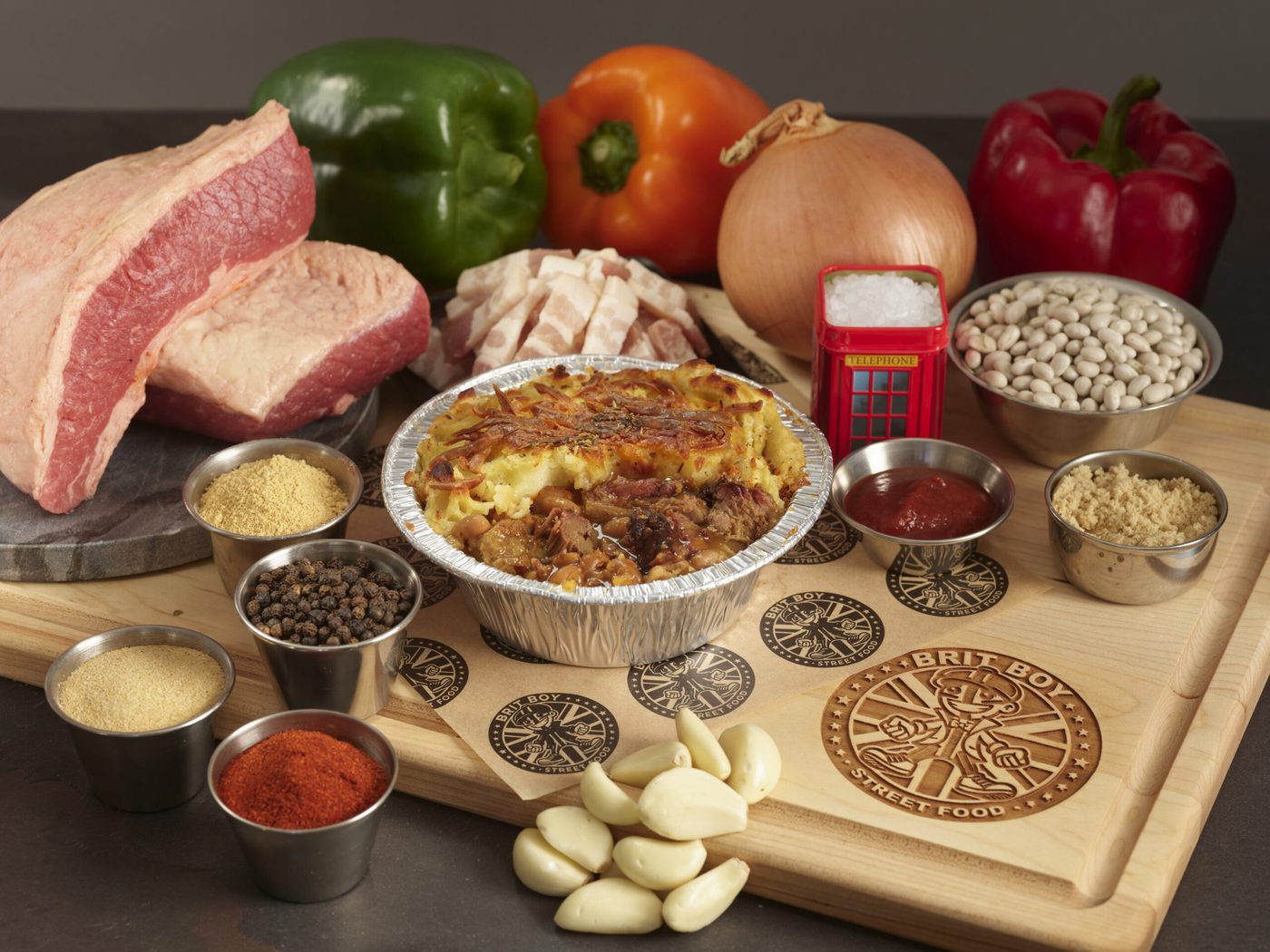
A sausage roll isn’t fine dining and was never meant to be. It’s food you eat with your hands, standing up, usually outside, often slightly too hot. It’s what you have at a football match, at a funeral, at a christening, on a train, at eleven in the morning because you skipped breakfast.
That’s the standard we’re aiming at. Not something clever — something that tastes the way it’s supposed to, made properly, by people who’ve eaten a lot of them.
Traditional and spicy, in packs of 4, 8 and 12 in the shop. Cook from frozen at 400°F for 25 to 35 minutes — full guide here. They’re also in the Union Jack Sampler alongside four pies if you want to try both.